
Ritual · Chapter 01
Uji, Kyoto.
Most of the lineup starts in Uji, Kyoto — the region that has supplied ceremonial tea since the 13th century. Each of those grades is a blend built by a tea master: cultivars chosen for what they contribute, held to the same character season after season. That is the Uji method, and it is harder than pouring whatever one hillside gave this year — worth it for a tin that has to taste the same in November as it did in April.
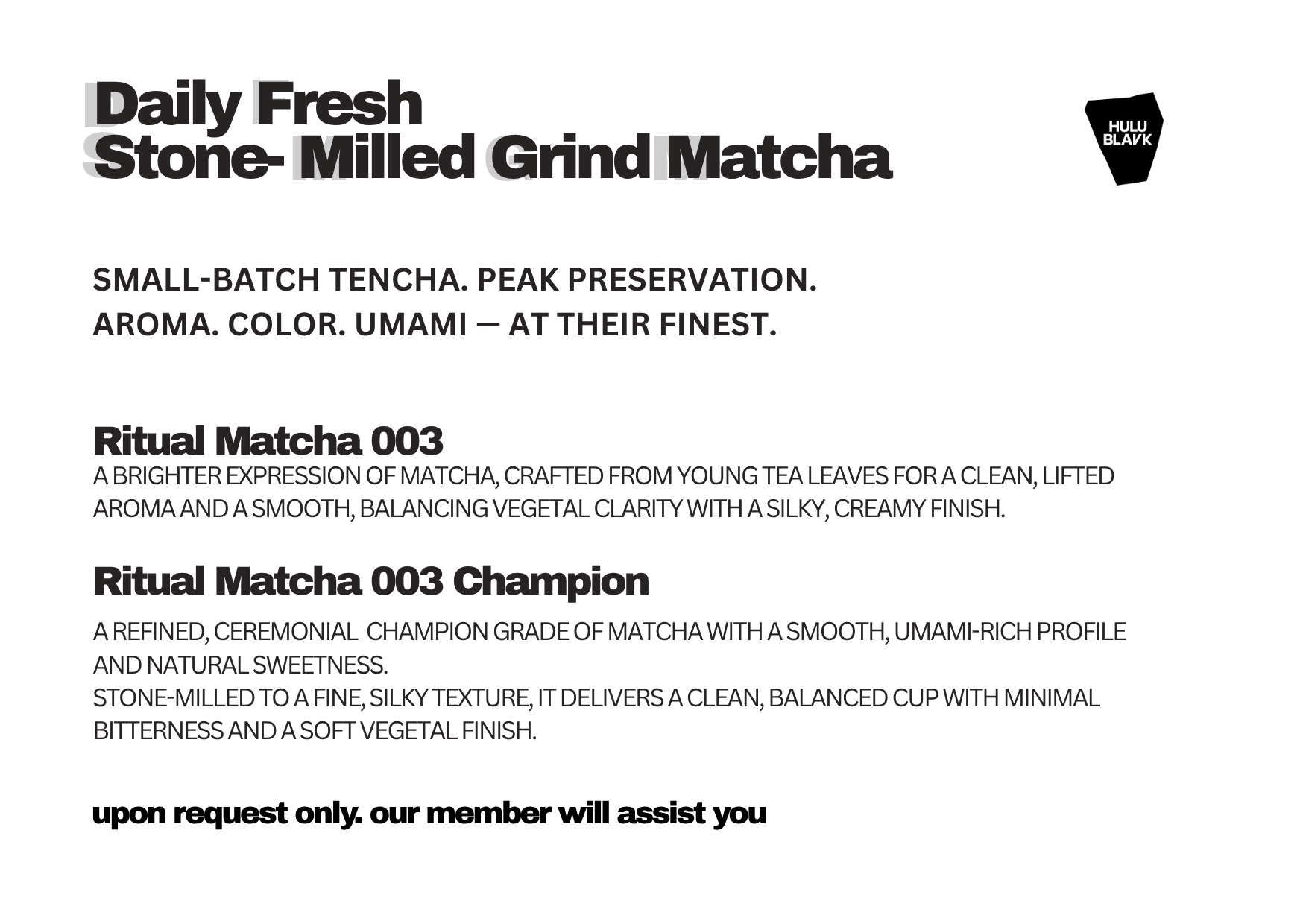
Ritual 003 doesn't have that problem, so it breaks the rule on purpose. It's milled and drunk the same day, which frees it to be a single distinctive lot instead of a blend built for consistency. The leaf comes from one named farm — Yamama Masudaen, an Emperor's Cup-winning tencha producer in Shizuoka — sealed whole and opened at the bar.
Shading begins weeks before harvest. Shade drives the leaf to produce more chlorophyll, more L-theanine, and fewer catechins — the chemistry behind ceremonial umami and quiet bitterness. Every tin we sell carries its own spec: origin, cultivar, harvest, mill, micronage.
The fields.
Region
Uji, Kyoto prefecture, Japan — Ritual 003 is Shizuoka
Cultivars
Yabukita · Okumidori · Sayamakaori — Ritual 003 is single-origin
Harvest
First flush · first-and-second blends · multi-flush, by grade
Mill
Stone-ground in Uji, sealed at origin · Ritual 003 milled in-bar
Micronage
5–20 microns across the six grades
Processing
Steamed, air-dried into tencha leaf, graded and blended by tea master
This is the lineup summary — the exact cultivar, harvest, mill and micronage for each grade is printed on that grade's own page.
Read the next chapter.
The stone-mill →